

Accessibility in Action at EVV Airport
For many travelers, navigating an unfamiliar airport can be one of the most stressful parts of a journey. From locating gates and baggage claim to managing security checkpoints and tight schedules, airports can often feel overwhelming, especially for travelers with disabilities or accessibility needs. At Evansville Regional Airport (EVV), however, accessibility is becoming a central part of the overall passenger experience.
Through its expanding “ForEVVeryone” Accessibility Initiative, EVV continues to invest in programs, services, and technology designed to create a more welcoming, independent, and inclusive environment for every traveler passing through the airport.
Smart Navigation Through GoodMaps
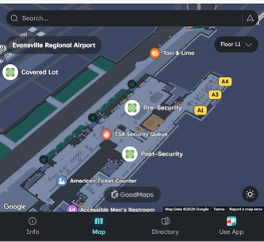
One of EVV’s newest accessibility advancements is its partnership with GoodMaps, an advanced indoor navigation platform that provides free, turn-by-turn wayfinding throughout the terminal. The free app, available on both Apple and Android devices, functions similarly to an indoor GPS system.
Using LiDAR mapping and AI-powered camera positioning, GoodMaps delivers highly accurate real-time navigation with sub-one-foot precision, all without requiring additional airport-installed hardware or Bluetooth sensors.
Developed in close collaboration with the Evansville Association for the Blind, the system was specifically designed to support blind and low-vision travelers. Through detailed audio guidance and verbal turn-by-turn directions, passengers can independently navigate to ticket counters, TSA checkpoints, gates, baggage claim, restrooms, and dining amenities without requiring physical escorts or assistance from airport staff.
The platform also benefits travelers with mobility needs by automatically providing step-free routes that avoid stairs and escalators. This feature improves the airport experience for wheelchair users, families traveling with strollers, elderly passengers, and guests with physical accessibility concerns.
Additionally, the app supports more than 25 languages, helping international travelers navigate the terminal with greater confidence and reducing communication barriers throughout the travel experience.
Supporting Hidden Disabilities
While some accessibility needs are visible, many are not. EVV has also partnered with the Hidden Disabilities Sunflower Program to better support travelers with non-visible disabilities such as autism, PTSD, hearing loss, anxiety disorders, and sensory sensitivities.
Passengers may voluntarily wear a Sunflower lanyard, bracelet, or pin to discreetly communicate that they may need additional patience, assistance, or understanding while traveling. Complimentary Sunflower items are available at the airport’s pre-security information desk near the TSA checkpoint.
Programs such as these demonstrate how airports can create more compassionate and personalized hospitality experiences by recognizing that accessibility extends beyond physical mobility alone.

Sensory and Wellness Resources
EVV has also introduced several sensory-friendly resources aimed at reducing stress and improving comfort for travelers of all ages.
Through partnerships with local nonprofit organizations, the airport now offers CAMSE (Cam’s Sensory Equipment) Kits at airline ticket counters, gate areas, TSA checkpoints, and the information desk. These kits contain sensory tools designed to help calm and comfort travelers who may become overwhelmed during the airport experience.
In addition, EVV features private nursing stations and quiet rooms located post-security near the children’s play area, providing travelers with a calm and private space when needed.
The airport has even introduced the “EVV Crew Dogs” therapy dog program, where certified therapy dogs periodically interact with passengers waiting for flights. These interactions can help reduce travel anxiety and create a more welcoming atmosphere throughout the terminal.
Accessibility Beyond Technology
Beyond its newer technology initiatives, EVV continues to prioritize foundational ADA accessibility throughout the terminal. Accessible features include automatic doors, elevators with raised markings, lowered service counters, accessible restrooms, wheelchair-friendly drinking fountains, designated handicap parking, and service animal relief areas. Wheelchair assistance is also available upon request through airlines operating at EVV.
The airport additionally promotes the use of TSA Cares, a program that helps travelers with disabilities and medical conditions receive additional support during the airport screening process.
These combined efforts highlight how accessibility in hospitality is not driven by one single initiative, but rather by a collection of thoughtful operational decisions that work together to improve the guest experience.
Why Accessibility Matters to Tourism and Hospitality
As the tourism and hospitality industries continue evolving, accessibility is increasingly becoming both a service expectation and a business priority. Travelers today are looking for destinations and organizations that prioritize inclusion, independence, and comfort for all guests.
Investments in accessibility benefit far more than a single group of travelers. Features such as step-free routing, multilingual navigation, quiet rooms, and improved wayfinding create smoother experiences for families, elderly travelers, international visitors, and first-time flyers alike.
For stakeholders in tourism, accessibility initiatives can also strengthen community reputation, improve customer satisfaction, increase traveler confidence, and expand market reach. By investing in inclusive travel experiences, EVV is reinforcing Evansville’s image as a destination centered around hospitality, innovation, and community connection.
The continued expansion of the ForEVVeryone initiative demonstrates how airports can move beyond simply meeting accessibility requirements and instead create environments where every traveler feels supported, respected, and empowered throughout their journey.
For more information about EVV accessibility resources or to download the GoodMaps app before traveling, visit the ForEVVeryone Accessibility Initiative, here